
Mon–Fri: 6 AM–11 PM, Sat–Sun: 7 AM–11 PM(951) 417-1035
L&T French Valley Spray Foam InsulationL&T French Valley Spray Foam Insulation

Air sealing services in French Valley CA - drafts closed off, needed vents left open

Drafty rooms, a hot upstairs or a power bill that keeps climbing? We find the hidden leaks and close them, keeping the vents open.

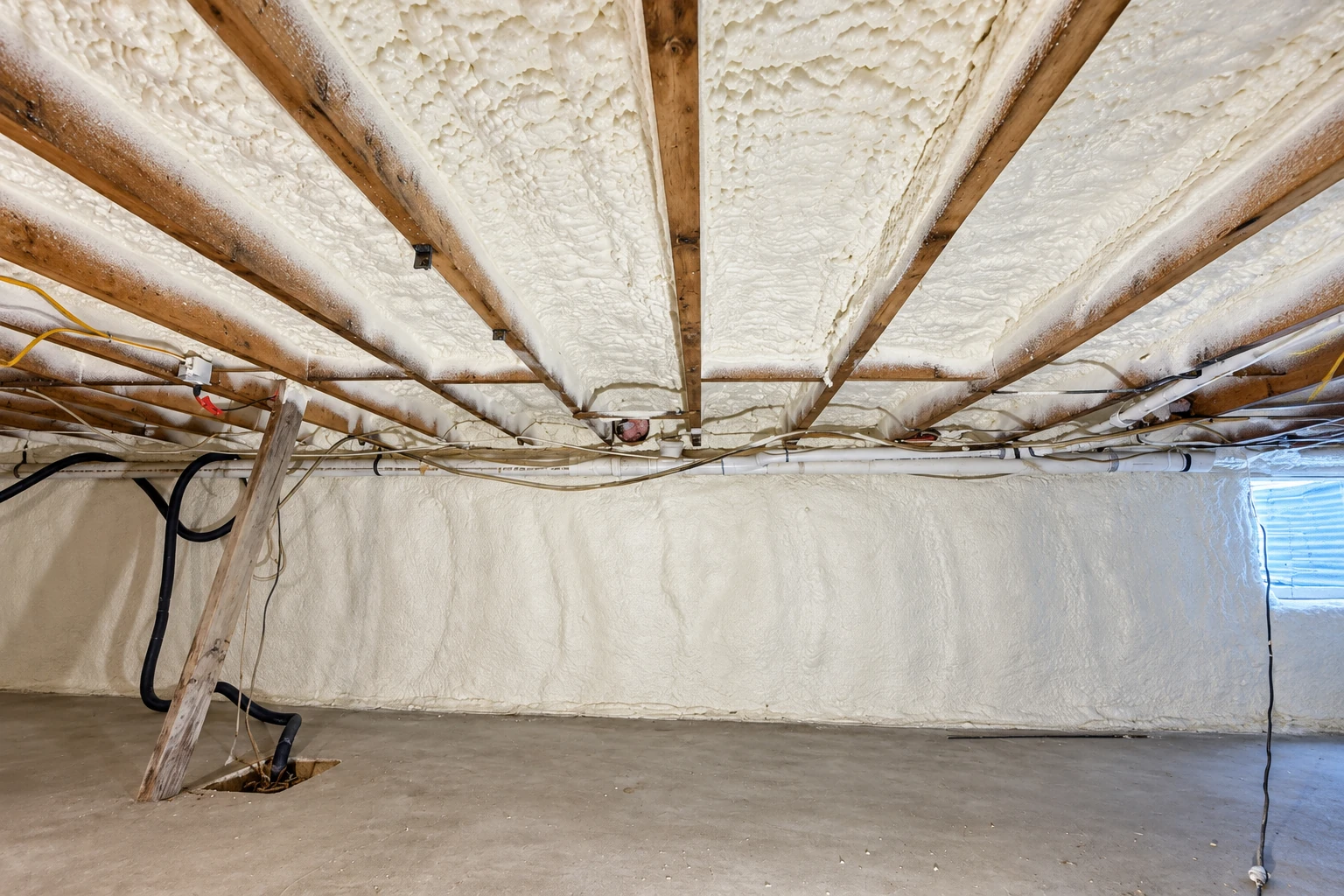
Spray foam coats the underside of floor joists and walls in a basement with exposed pipes and wiring.

What do air sealing services actually fix in a French Valley house?

Air sealing services in French Valley close the cracks, holes and gaps that let air slip in and out of your house, so rooms stop feeling drafty and your heating and cooling don't have to work as hard.

Most calls start with a room that won't stay comfortable, like the one over the garage, a hot upstairs or cold floors, or with a power bill that keeps climbing even though there's insulation up there. Usually the air is moving through gaps around pipes, wires, ducts, can lights and the attic hatch, and that same air can carry moisture into the wood, where it leads to rot and mold.

What moves the price is how much there is to work around: how deep the old insulation is, how many pipes, wires, ducts and lights come through the ceiling, whether ductwork runs through the attic, and whether anything has to be fixed or tested before we seal. The schedule turns on the same things, plus any repair that has to come first and whether your job needs a permit. I look it over in person and put what I'd do in writing, so you're working from your own house and not a guess.

What happens after you call about air sealing in French Valley?

We've been in business since 2020, and I'm part of every step from the first look to the last walk-through. Here's how it goes after you call or send the form.

I come out and look before I quote

I come to your house myself and go up into the attic, and I'll look at the walls or crawl space too if they're part of the problem. I'm checking for anything that should be fixed or tested first, like a roof leak or old insulation, because sealing over it just wastes your money.

A written estimate that explains what I found

You get the estimate in writing, with what I saw, what should come first and what I'd do, in plain words. If the job isn't a good fit, or a different fix should come first, I'll tell you that too.

Our crew does the work, with me on site

When you're ready, our crew does the sealing with me there leading it, then we clean up and I walk you through what we did. We're fully licensed and insured. California licenses insulation work under its own contractor classification.

How our air sealing service works in your house

We go after the leaks you can't see, the ones hiding under the attic insulation and around the pipes, wires and ducts that come up through your ceilings. We seal those and leave the soffit, ridge and gable vents and any combustion air openings clear on purpose, because your attic and your appliances need that air to work right. If you have a gas furnace, water heater or fireplace, a safety check on them is part of the plan before we seal anything, so the house gets tighter without starving them of air.

Foam is the other way to go. Closed-cell foam insulation, a dense foam that also blocks moisture, seals and insulates at once, but it costs more, so for most attics I'd rather seal the gaps and top up the loose fill. The exception is when your ductwork runs through the attic, where foam usually earns its price. If your house has a basement, sealing down there pairs well with basement insulation, since air pulled in low tends to leave through the top of the house.

  • Finding the leaks hidden under your attic insulation
  • Sealing gaps around pipes, wires, ducts, can lights and the attic hatch
  • Leaving soffit, ridge and gable vents and combustion air openings clear
  • Planning a safety check for gas appliances and fireplaces before we seal
  • Laying the insulation back evenly, edges included

How the work goes in your attic

Air sealing is close-up work, most of it done on hands and knees between the ceiling joists. Here's the order we keep, and why.

  1. Protect the path to the hatch

    We cover the floor and anything under the attic hatch before we open it, so the dust from up there stays off your things. I'll tell you ahead of time if anyone should stay out of a room while we work, based on the materials we're using.

  2. Pull back the insulation and look

    We move the insulation back from the spots that leak most, and dark, dirty patches in it usually show where air has been moving for years. If what's under there is soaked or full of droppings, it comes out instead of getting buried under the job.

  3. Seal each gap with the right material

    Small gaps around pipes and wires get sealant, while big openings get solid blocking and hot flues get metal, because foam doesn't belong against a flue. Can lights that aren't rated to touch insulation get a cover so they can sit under it safely.

  4. Put the insulation back evenly

    We lay the insulation back so it's as deep at the edges as in the middle, because thin edges near the eaves are where heat gets through. We keep it off the eave vents too, so the attic can still breathe and moisture doesn't collect in the framing.

Get a free written estimate for sealing your house

Send the form and we'll get back to you within one business day to set a time. I'll come out, look over the attic and anywhere else air is getting in, and give you a free written estimate with no pressure to book.

(951) 417-1035

Air sealing questions from French Valley homeowners

Is insulation enough to stop drafts in my house?

Usually not, because insulation slows heat but doesn't necessarily stop air from moving through cracks and gaps. Think of insulation as a sweater and air sealing as a windbreaker, and on a windy day you want both. That's why we seal first and insulate after.

Can I seal air leaks in my house myself?

Yes, for the obvious leaks around door frames and where pipes, vents, wires, ducts and fans come through. What a weekend project won't catch are the small, hard-to-find leaks, like the ones in the attic under the insulation, and that's the work we do.

Is air sealing safe if I have a gas furnace or fireplace?

Yes, as long as the fresh air those appliances need is worked out before any sealing starts. A furnace, water heater or fireplace that runs short of oxygen can give off carbon monoxide, so that's what we plan around first and why the safety check comes before we seal. When you compare contractors, it's fair to ask whether their look at your house checks how well it's ventilated.

Who handles permits for air sealing in French Valley?

In French Valley, permits, plan review and inspections go through the Riverside County Department of Building and Safety. I check which office covers your address, and when a permit is part of the job we handle it with the county. If it isn't clear whether your job needs one, we ask them before any work starts.

Permits and energy testing for French Valley homes

If you'd like to talk the county process through yourself, Riverside County has a permit process advisor for the district French Valley is in, at 951-955-3250. The state's HERS testing, a home energy test on the finished work, may be required depending on what we do, and properly permitted work brings on any testing that's needed, so I'll explain which of these applies to your job before we start.

We're based in French Valley and work across the cities around it in southwest Riverside County, including Murrieta, Menifee, Temecula and Wildomar. Many of the houses we're in have attics crossed with ducts, wiring and can lights, and that's where most of the leaks we find start.

Call us about the drafts in your house

Jot down your gas appliances and any attic trouble you already know about, like a roof leak or a fan that vents up there, then call (951) 417-1035 or use the contact form so I can plan the visit around them.

If you can't tell whether it's the insulation or the leaks, give us a call and we'll sort it out together.

Tell us about your project
(951) 417-1035Get an estimate