
Mon–Fri: 6 AM–11 PM, Sat–Sun: 7 AM–11 PM(951) 417-1035
L&T French Valley Spray Foam InsulationL&T French Valley Spray Foam Insulation

Attic insulation in French Valley CA - an even layer over a sealed, dry ceiling

Hot upstairs rooms and a summer power bill that keeps climbing usually start in the attic. We check it, fix what's wrong, then insulate.

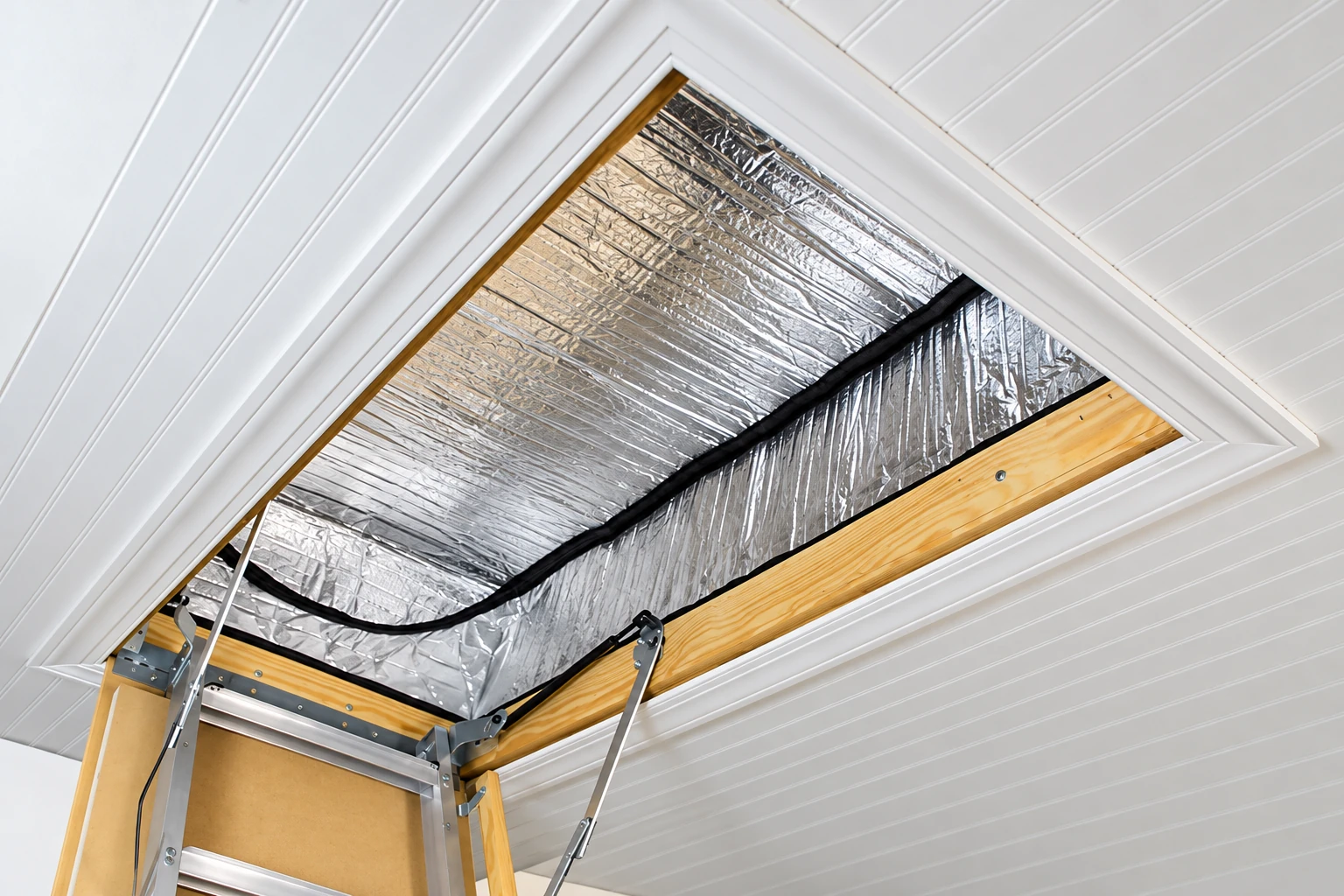
An open ceiling hatch reveals reflective insulation lining an attic, with a folding ladder below.

Does your attic in French Valley need more insulation?

Attic insulation in French Valley is a layer of blown cellulose or fiberglass spread evenly across the attic floor, after air sealing closes the gaps in the ceiling, so the rooms below hold their temperature and your AC isn't fighting the sun all afternoon.

Most calls start with a hot upstairs, a room over the garage that never cools off or a power bill that climbs every summer. Usually the old layer has settled thin, or air is slipping up through gaps around lights, pipes and the hatch, and sometimes there's a roof leak or old wiring that has to be dealt with before anything new goes in.

The price moves with the size of the attic, how many inches are already up there, how many gaps need sealing and whether wet or dirty material has to come out first. The schedule turns on those same things, plus any roof or wiring repair that has to happen before we start, and the written estimate I leave you lays out what I found and what I'd do for your house.

What happens after you call us about your attic?

We've been in business since 2020, and every attic job runs through the same three steps, with me there for each one.

I look at your attic before I quote

I come out myself, climb up through the hatch and look over the whole attic floor and the ceiling below it. I'm checking for anything that should be fixed or tested before new insulation makes sense, because that decides what the job really is.

A written estimate that puts things in order

I explain what I found in plain words, standing right there with you, then put what I'd do in writing, including anything that has to come first. If the right first call is a roofer or an electrician, I'll tell you that instead of selling you a layer that won't help.

Fully licensed and insured, with me on site

We're fully licensed and insured. I lead our crew while the work gets done, we clean up, and then I walk you through the finished attic. In California, insulation work falls under the state's C-2 insulation classification.

How we handle attic insulation

Before anything goes in, I check how high the old layer sits over the joists and look for wet spots, damaged wood or old wiring, because each of those changes the plan. Wet insulation usually means the roof is leaking, rotted framing and fan vents that blow into the attic need fixing, and old knob and tube wiring can be a fire hazard when insulation touches it, so national guidance says a professional should deal with all of those first. Around recessed lights that aren't rated IC, short for insulated ceiling, we hold the insulation back, and the federal guide puts that gap at least 3 inches. Once the attic is dry and sound, we seal the gaps, open up the eaves and blow in the new layer.

Most attic jobs come down to blown-in insulation, because loose fill settles into every corner of the attic floor and tops up an old layer without tearing it out. If the attic is only part of why your house feels uncomfortable, our home insulation work looks at the walls and floors too.

  • A look at the old layer, the framing and the wiring before we plan anything
  • Air sealing around pipes, wires, the hatch and the tops of the walls
  • Baffles at the roof edge to keep the eave vents clear
  • An even layer of blown cellulose or fiberglass across the whole attic floor
  • A covered path from your door to the attic access

How the work goes in your attic

Order matters more than anything up there, because insulation laid over an open gap or a buried vent just wastes your money. Satisfaction guaranteed on every job.

  1. Cover the way in

    Our crew lays covers from the door to the attic hatch before we run the hose, so dust and fiber stay out of your rooms. If you have kids or pets, it helps to keep them in another part of the house while we're working.

  2. Seal the gaps first

    Loose fill slows heat but doesn't stop moving air, so warm attic air pushing through gaps around pipes, wires and the hatch will undo a lot of the new layer. We close those gaps first so the insulation isn't fighting a draft.

  3. Keep the eaves breathing

    We set baffles, short channels at the roof edge, so the eave vents stay open and the new fill can't spill into them. A buried eave vent stops the attic from breathing, and that's when moisture starts showing up in the framing.

  4. Blow an even layer to the edges

    We blow the fill out to the top of the outer walls and keep the depth as even as we can, because deep in the middle and thin at the edges is backward. Then I check the depth across the attic before we pack up the hose.

Get a written plan for your attic

Send the form or call (951) 417-1035, and we'll get back to you within one business day to set a time. I'll come out, look over your attic and check for anything that should be fixed or tested first, then leave you a free written estimate with no obligation to book.

(951) 417-1035

Attic insulation questions from French Valley homeowners

How do I know if my attic needs more insulation?

If you can easily see the floor joists, the beams that run across the attic floor, your attic needs more insulation. If the old layer sits well above them, you probably have enough, and adding more may not pay for itself. When we do add more, the guidance is that the new layer should meet or exceed what current building codes call for, and I'll show you how the plan compares.

How much does attic insulation cost in the Riverside area?

Attic insulation in the Riverside area usually costs about $1,500 to $5,000 per job. Where your house lands depends on the things that move the price above, mostly the attic's size, what's already up there and what has to be sealed, fixed or removed first. At L&T French Valley Spray Foam Insulation, I put what I'd do for your attic in writing after I've looked.

What should I do if my attic has vermiculite insulation?

Leave it alone until an approved lab has tested it for asbestos, because vermiculite may contain it. It looks like small, flaky gray bits about the size of a pea, and if I see it on the estimate visit, nothing gets disturbed and nothing new goes in until it's been tested.

Is spray foam or blown-in better for an attic in French Valley?

For most attics, sealing the gaps and topping up with loose fill is the better buy. Spray foam insulation costs more and seals air while it insulates, which is worth it when your ductwork runs through the attic, so I'll tell you which fits once I've seen where your ducts are.

Permits and attic work around French Valley

French Valley is covered by Riverside County Building and Safety, which issues permits and also handles plans review and inspections. Its list of self-certified permits names water heaters, re-roofs and HVAC but not attic insulation, so that list alone doesn't settle whether your job needs one, and I check with the county before we start. When a permit is part of the job, we handle it with them, and if your attic work comes with a new AC system, a re-roof or new windows, the county requires a licensed contractor to sign off those permits.

We're based in French Valley and work across the cities around it in southwest Riverside County, including Murrieta, Menifee, Temecula and Wildomar. Some of those cities run their own building offices and others fall under the county, so I check which one covers your address. Around here we see plenty of newer houses with the AC and its ducts up in the attic, and older ones where the layer has settled down level with the joists.

Call us before you add another layer

If you know how you get into the attic, how old the wiring is and whether your can lights are rated IC, have that handy when you call (951) 417-1035 or send the form, and I'll know what to look for before I climb the ladder.

If you're not sure your attic needs anything at all, call and ask, and I'll tell you straight.

Tell us about your project
(951) 417-1035Get an estimate