
Mon–Fri: 6 AM–11 PM, Sat–Sun: 7 AM–11 PM(951) 417-1035
L&T French Valley Spray Foam InsulationL&T French Valley Spray Foam Insulation

Wall insulation in French Valley CA - every cavity filled, no hollow spots

Rooms that bake in summer and chill at night often have hollow walls. We fill them so the house stays comfortable.

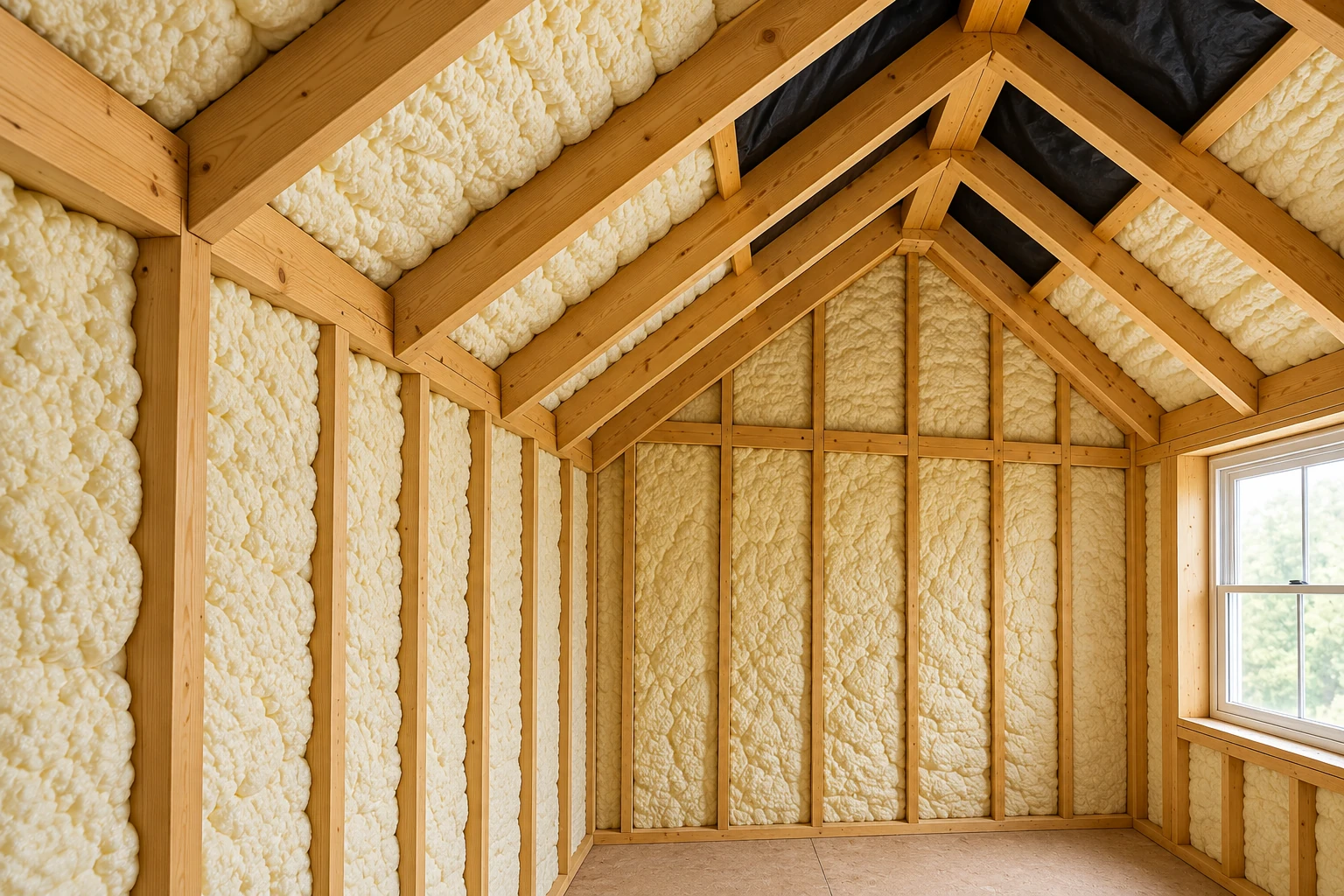
Cream-colored spray foam fills the wall and roof cavities between exposed wooden framing.

Can you insulate my walls without tearing them out?

Most finished walls in French Valley can be insulated without tearing them out. We fill the hollow spaces between the studs through small holes and then plug them, so your rooms hold their temperature better and less outside noise gets in.

Most calls start with a room that never feels right. The bedroom upstairs bakes by late afternoon, the room over the garage is cold on winter mornings, or an outside wall feels warm when you put your hand on it. When there's little or nothing inside those walls, heat moves straight through them, and changing the thermostat won't fix that.

The price depends on how many walls we're filling, whether they're closed or still open from a remodel, and how the framing is laid out, since odd-shaped cavities take more time than even ones. The schedule depends on how many rooms are involved and whether something has to be fixed first, like a leak that's soaked a wall. French Valley is unincorporated, so permits here go through the Riverside County Department of Building and Safety. When a permit is part of the job, we handle it with the county, and if it's unclear, we ask them before work starts. After I look over the house, you get your own estimate in writing.

What happens when you call about wall insulation in French Valley?

You deal with me from the first visit to the last wall, and nobody drills anything until we both know what the job is.

I look over the walls myself

I come out for the estimate, check the outside walls and the attic above them, and look for anything that should be fixed or tested first, like a water stain or old insulation that pests have gotten into. I'd rather tell you to fix a leak first than fill a wall that's going to stay damp.

A written estimate that says what comes first

You get what I found and what I'd do in writing, including which walls, which method and anything that has to happen before we start. If wall insulation isn't the right fix for your problem, I'll tell you that plainly.

Licensed and insured, with me leading the crew

We're fully licensed and insured. I'm on site running our crew when the work gets done, and we've been at it since 2020.

How we handle wall insulation in your house

On closed walls, we start by covering your floors and closing off the room we're working in so the dust stays put. Then we drill small holes into each cavity, blow the insulation in packed tight so it won't settle and leave empty pockets, and plug the holes. Afterward I check every wall to make sure nothing's left hollow, because one empty space between studs is a cold spot you'll feel all winter. Blown-in insulation, which is loose fill pushed through a hose, suits closed walls and odd-shaped cavities. Walls that are open during a remodel usually get batts, which are rolls of insulation, cut to fit snug around wiring and boxes without being squashed. Batts often cost less when the studs are evenly spaced.

Filling the walls is only part of making a room comfortable. Drafts come in around outlets, window trim and the top of the wall where it meets the attic, so we often pair this job with air sealing services and close those gaps first, so the new insulation isn't fighting moving air. If your house has rooms below ground, basement insulation covers those walls, which need a different approach than the framed walls upstairs.

  • Look over each wall and what's around it before we drill
  • Cover floors and close off the work area inside
  • Fill each closed cavity through small holes and plug them
  • Fit batts snug in open walls without squashing them
  • Check every wall for hollow spots, then clean up

The order we do the work in

Insulation only pays off when it goes in after the problems that would undo it, so we keep every wall job in this order.

  1. Fix what has to come first

    If I find a leak, a damp spot or old insulation that needs testing, we deal with it before we touch the walls. Insulation packed over a wet wall just holds the moisture in.

  2. Seal the gaps we can reach

    We close up the openings around outlets, pipes and the top of the wall wherever we can get to them. Air moving through those gaps carries heat right past the insulation.

  3. Clear the walls and fill them

    We'll ask you to pull furniture a few feet away from the walls we're working on, and to keep kids and pets out of those rooms while we drill and blow. Then we fill each cavity the way described above.

  4. Clean up and walk through it

    We clean the work area before we leave, and I walk you through each wall we filled. It's satisfaction guaranteed on every job.

Get a written estimate for your walls

Send the form and we'll get back to you within one business day to set a time. I'll come out, look over your walls and anything that needs fixing first, and give you a free written estimate. There's no obligation and no pressure to book.

(951) 417-1035

Wall insulation questions we hear in French Valley

How do you insulate existing walls without removing the drywall?

Most installers use drill and fill. They drill small holes into each wall cavity, blow insulation in and seal the holes, which the Department of Energy describes for older homes with uninsulated wall cavities in a temperate climate. Whoever you hire, ask how they make sure every cavity gets completely filled, because settling or a missed space leaves gaps in the wall.

How much does wall insulation cost per square foot?

Installing blown-in wall insulation usually costs about $4 to $4.50 per square foot across the US. That's a national figure. Your price depends on how many walls we fill, whether they're open or closed, and what has to be fixed first. Your written estimate gives you the number for your house.

Who is allowed to install insulation in California?

In California, the Contractors State License Board's C-2 Insulation and Acoustical Contractor class covers installing insulation for temperature or sound control. The state lets someone without a license do minor work up to $1,000, but only when the job needs no permit and that person has no employees on it.

How long does blown-in cellulose insulation last in walls?

The cellulose insulation industry's trade group says properly installed cellulose can work well for decades. How carefully it goes in decides how long it keeps paying off, which is why a dense, even fill matters. The same group lists sound control and fire protection among its benefits.

Wall insulation in French Valley and the cities around it

Around French Valley, most of our wall calls are about upstairs bedrooms and rooms over the garage that heat up through long inland summer afternoons, and the walls that face the late sun are usually the worst. California's energy code sets its standards for walls and the rest of a home's outer shell by climate zone. Advice written for a house somewhere else may not fit yours, so I'd rather look at your walls than go by a rule of thumb.

We're based in French Valley and do the same wall work across southwest Riverside County, including Murrieta, Temecula, Menifee, Wildomar and Lake Elsinore. If you're in one of the cities around us, the job runs the same way it does here.

Call us about the walls that bother you

When you call (951) 417-1035 or send the form, tell us how old your home is, which rooms bother you and whether the walls are open or closed, so I show up ready to check the right things.

If one room in your house never feels right, send us a note and we'll talk it through.

Tell us about your project
(951) 417-1035Get an estimate