
Mon–Fri: 6 AM–11 PM, Sat–Sun: 7 AM–11 PM(951) 417-1035
L&T French Valley Spray Foam InsulationL&T French Valley Spray Foam Insulation

Attic air sealing in French Valley CA - fewer drafts and less dust from the attic

Drafty rooms, dust around the ceiling lights or a hot upstairs usually point to gaps into the attic. We find them and seal them right.

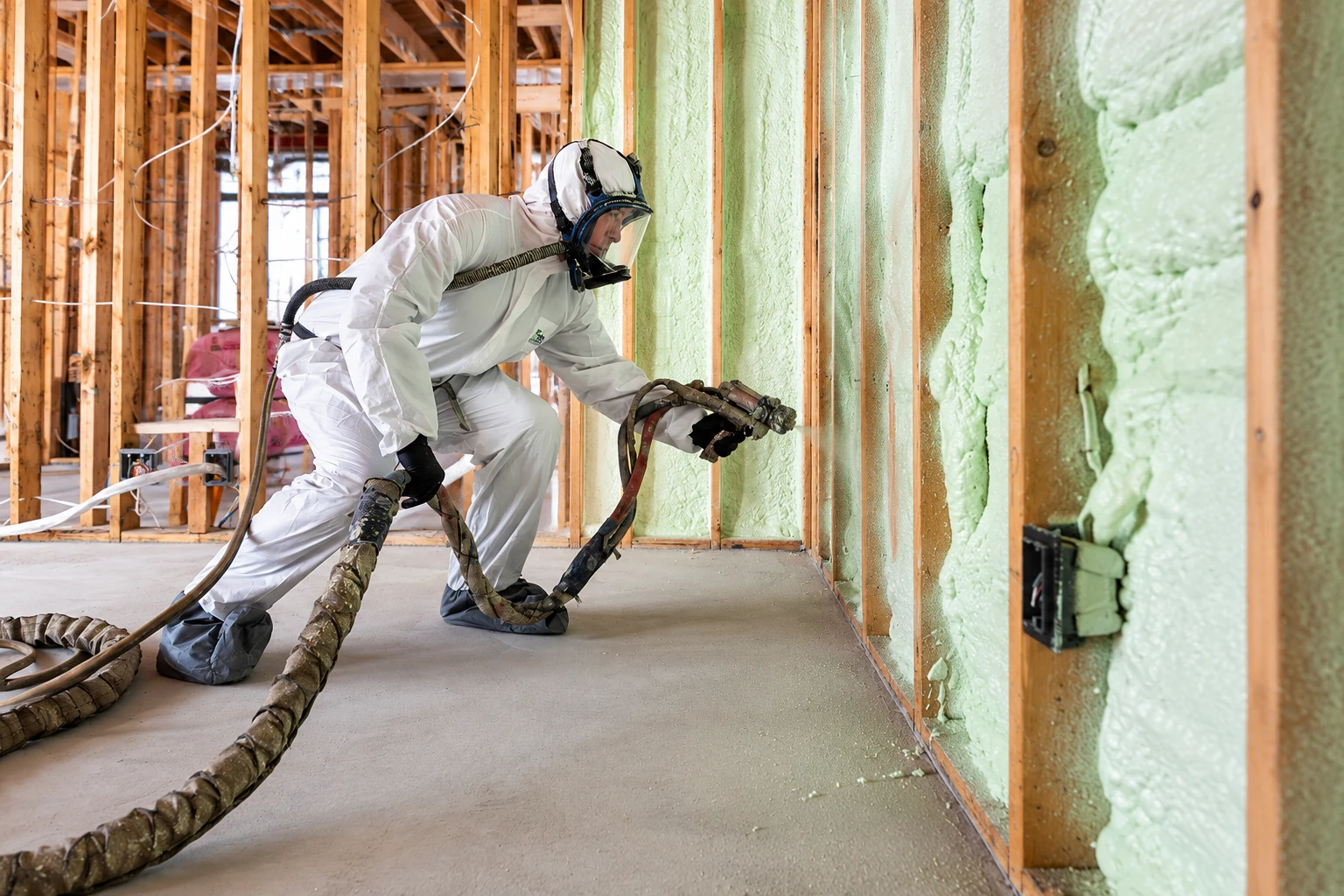
A worker in protective gear sprays green foam insulation into the framed walls of an unfinished building.

Does my French Valley attic need air sealing?

Attic air sealing in French Valley closes the gaps between your rooms and the attic, around ceiling lights, the duct boots where vents meet the ceiling, wiring, plumbing pipes and flues, so the air you pay to heat and cool stays in the house and attic dust stays in the attic.

Most people call because of something they notice downstairs, like a drafty hallway, a hot upstairs, a room over the garage that never feels right, or gray dust lines along the carpet edges and around a ceiling light. That dust usually means air is moving through a gap, and it's why the power bill can stay high even with a decent layer of insulation up there.

The price moves with how many openings there are, how big they are, how easy the attic is to crawl through, and whether old insulation has to be pulled back or removed to reach them. The schedule mostly turns on what has to be fixed or tested before we seal, which I cover below. I look over your attic in person and put what I found and what I'd do in writing, so you're working from your own house and not a guess.

What happens after you call about attic air sealing?

You deal with me from the first look to the final walkthrough, and our crew does the work in between.

I look at your attic myself

I come out for the estimate, climb up with a flashlight and check the gaps, the old insulation, the vents and anything that should be fixed or tested first. We've been in business since 2020, and I still do every estimate in person.

A written plan with the fixes in order

You get what I found and what I'd do written down, in the order it should happen, so a repair doesn't end up scheduled after the sealing. If air sealing isn't the right next step for your house, I'll tell you that.

Licensed, insured, and me on site

We're fully licensed and insured. When the work starts I'm in the attic leading our crew, and once we've cleaned up I walk you through what we sealed.

How we do attic air sealing

If there's a roof leak or a bath fan blowing into the attic, that gets fixed before we seal, because sealing over a wet spot just locks the problem in. Then we move the insulation back and close the narrow gaps around wiring, pipes, light fixtures and duct boots with caulk or foam. Big openings like a chase, the framed shaft where ducts or a flue run up, get a solid board cut and sealed over them instead of stuffed insulation, since insulation slows heat but doesn't stop air. Around flues we use fire-rated materials and keep the right clearance from anything that can burn, and we leave the soffit, ridge and gable vents open so the attic keeps breathing.

Once the gaps are closed, most attics just need more loose fill blown in over them, which we handle as retrofit insulation. Spray foam insulation seals and insulates in one pass, but it costs more, so I usually recommend sealing and topping up loose fill unless your ductwork runs through the attic.

  • Gaps around ceiling lights, wiring, pipes, duct boots and the attic hatch sealed with caulk or foam
  • Solid board cut and sealed over chases and other large openings
  • Fire-rated sealant and metal around flues, with clearance kept from anything that burns
  • Soffit, ridge and gable vents left open so the attic can breathe
  • Insulation laid back evenly over the sealed areas

What the work looks like in your attic

Every attic is laid out a little differently, but the work runs in the same order so nothing gets buried that shouldn't be.

  1. Protect the house and find the leaks

    We cover the floor under the hatch and the path to it, then look for dark, dusty spots in the insulation where air has been pulling through. Those stains usually lead straight to the worst gaps.

  2. Check what's under the old insulation

    If the old insulation is soaked or full of droppings, we stop and talk with you, because new material over a mess leaves the problem in place. Clean insulation gets moved aside just far enough to reach the gaps.

  3. Seal and check each spot

    We work across the attic in sections and check each seal before moving on. That includes the hatch itself, which is easy to overlook and leaks plenty.

  4. Put the insulation back evenly

    Insulation goes back as deep at the edges as in the middle, without burying the eave vents, so there are no thin spots over the outside walls. Buried vents trap moisture, so we check them before we come down.

Get a written plan for sealing your attic

Send the form or call (951) 417-1035, and we'll reply within 1 business day to set up a free estimate at your property, with no pressure to book. I'll come out, look over the attic and put what I'd do in writing, so it helps to have notes ready on any roof leaks, where your bath fans vent and which gas appliances you have. Satisfaction guaranteed on every job.

(951) 417-1035

Questions about attic air sealing

Is attic air sealing worth it for my home in French Valley?

For most houses, yes, because federal building guidance calls sealing uncontrolled air leaks one of the most cost-effective ways to improve a home, and it can lower heating and cooling bills. It can also cut drafts, keep out dust, pollen, pests and moisture, and reduce the moisture problems that wear a house down over time. I'll tell you at the estimate whether your attic has enough leaks to make it worth doing now.

What has to be fixed before attic air sealing can start?

A federal guide says to hold off if the attic has live knob and tube wiring, the old cloth-wrapped kind, or vermiculite insulation, bath fans venting into it or a leaking roof, and the same goes for a house with an unvented kerosene heater or gas fireplace. If you have a gas furnace or water heater that vents on its own draft, the guidance calls for a combustion safety test first, a check that exhaust goes out the flue the way it should, and any problem it finds gets fixed before sealing. That's why I ask about all of this at the estimate, so it's planned in from the start.

Should I seal my attic or add insulation first?

Seal first, because the federal attic guide finishes air sealing before insulating to get the most energy savings. If you're planning to add insulation, book the sealing ahead of it, since the gaps are much harder to reach once fresh insulation is piled on top.

Riverside County and California rules for this work

Some of the cities we work in run their own building office and others fall under Riverside County, so I check which one covers your address first. French Valley is covered by the county's District 3 office, which answers at 951-955-3250 if you'd like to ask about a permit yourself. The county keeps a list of common projects that need no building permit, but its rules also say an exemption doesn't give anyone the right to do work that breaks the code. When a permit is part of the job, we handle it with that office, and if it's unclear, we ask them before work starts.

California's contractor licensing board licenses insulation contractors, the trade that installs insulating material to control heat or sound. The state lets someone without a license take small jobs up to a $1,000 limit, but only if the work needs no permit and that person employs no one, so it's worth asking anyone who shows up with a crew. We're based in French Valley and work across the cities around it in southwest Riverside County, including Murrieta, Menifee and Temecula.

Call before you add more insulation

We answer from 6 AM to 11 PM on weekdays and 7 AM to 11 PM on weekends, so call (951) 417-1035 or send the form whenever you get a minute.

If you're not sure your attic is ready for sealing, tell us what you've noticed and we'll take a look.

Tell us about your project
(951) 417-1035Get an estimate