
Mon–Fri: 6 AM–11 PM, Sat–Sun: 7 AM–11 PM(951) 417-1035
L&T French Valley Spray Foam InsulationL&T French Valley Spray Foam Insulation

Commercial insulation in French Valley CA - a building that holds its temperature

Tenants complaining about hot suites or a power bill that keeps climbing? We seal and insulate the whole shell so every room stays even.

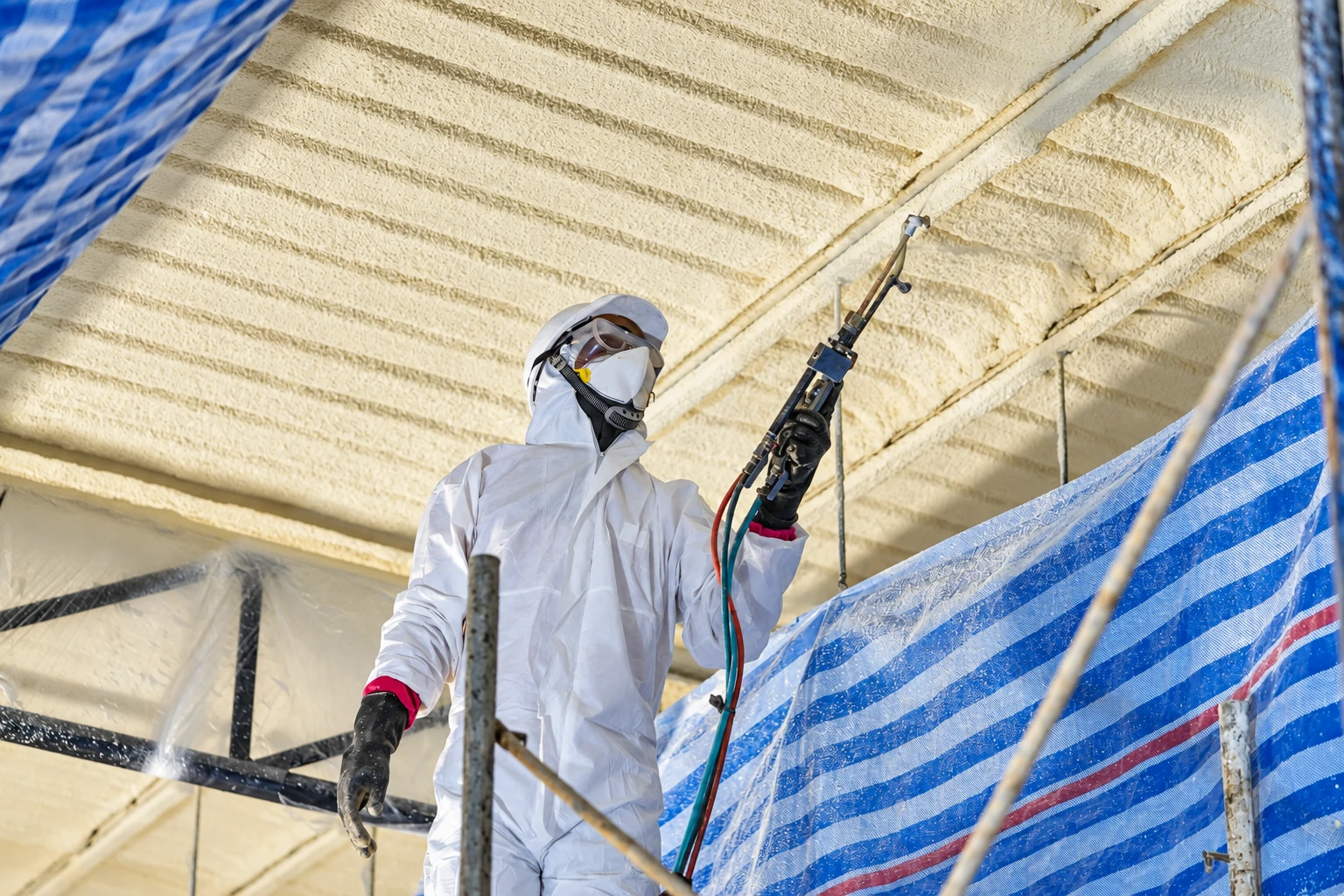
A worker in white protective gear sprays insulation onto a commercial ceiling, with striped plastic sheeting nearby.

What's involved in insulating a commercial building in French Valley?

Commercial insulation in French Valley adds insulation to the roof, walls and foundation of a shop, office or rental building and seals the air leaks around it, so the shell between inside and outside keeps the heating and cooling you're paying for.

Most calls from business owners and property managers start the same way, with a suite that runs hot every afternoon, tenants asking about drafts, or a power bill that keeps creeping up. Patching the one wall people complain about rarely fixes it, because heat and air usually find their way in somewhere else, and moisture can ruin new insulation if nobody planned for it.

The price mostly turns on how many square feet of roof and wall we're covering, what's in there now and whether it has to come out, and the material, since foam costs more than sealing gaps and adding fiberglass or blown-in, which is loose fill blown through a hose. The schedule turns on the size of the building, anything that has to be fixed or tested first, like a roof leak or old insulation, and a permit when one is part of the job, which we handle with whichever office covers your address. I'll give you your own number once I've looked the building over, with what I'd do in writing.

What happens when you call us about commercial insulation in French Valley?

We've been in business since 2020, and a commercial job starts the same way a house does. I look before I quote, and I tell you what I find in plain words.

I come out and look before I quote

I come out for the estimate myself and go over the roof, walls and foundation, checking for anything that should be fixed or tested before insulation goes in. A roof leak or soaked old insulation comes first, because new material over it just wastes your money.

A written plan for the whole building

Your estimate covers the whole shell, where insulation is needed, how it meets the roof and walls, and where moisture could cause trouble, not just the one room people complain about. That lets you weigh it against other bids on workmanship, not only on material and price.

Fully licensed and insured, with me on site

How well insulation works depends heavily on how it's installed, so I'm on site leading our crew while the work gets done. We're fully licensed and insured, with satisfaction guaranteed on every job.

How we handle commercial insulation

On a business or rental building I look at the whole shell and how moisture moves through it, because a dry, tight shell is what lets insulation do its job. We take care of anything leaking or soaked first, close the gaps around pipes, conduit, hatches and seams, the step we call air sealing, and then insulate. Foam costs more and seals air while it insulates, so I'd pick it where ductwork runs through the space, and otherwise sealing the gaps and adding loose fill or rigid foam board usually gets you more for the money. If we use spray foam, I'll show you where later work with torches or hot metal needs care, because unprotected foam can catch fire from a cutting torch or red-hot metal.

Insulation only stays dry if the moisture around it is handled too. Under the floor, a crawl space vapor barrier keeps ground moisture away from the framing and insulation, and vapor barrier installation in walls and ceilings keeps damp air from soaking into new material. I'll tell you on the estimate whether your building needs either one.

  • A look at the whole roof, walls and foundation, with moisture in mind
  • Leaks, soaked material or droppings dealt with before anything new goes in
  • Gaps at pipes, conduit, hatches and seams sealed before insulating
  • Spray foam, rigid foam board, fiberglass or blown-in, matched to each part of the building
  • A clear note on where spray foam needs care during later torch or welding work

How the job runs once you say go

Once you have the written estimate and you're ready, the work follows the order on it, so nothing new goes over a problem.

  1. Set up and protect the space

    We cover floors and anything near the work area and run hoses and equipment where they stay out of the way. If spray foam is part of the job, I'll tell you the re-entry time, when people can safely come back into that area, before we start.

  2. Fix what comes first

    Old insulation that's soaked or full of droppings comes out, and anything I flagged for repair or testing gets settled before new material goes in. If something else turns up once the space is open, I'll show you and explain it before we go further.

  3. Seal, then insulate

    We close the gaps first so the new insulation isn't fighting a draft, then install the material from your estimate to an even depth, edges included. Vents stay clear so the building can still breathe.

  4. Clean up and walk it with you

    We haul off the old material and leave the space clean. Then I walk you through the finished job and show you what went where, including where any spray foam is.

Get a written insulation plan for your building

Send the form or call (951) 417-1035, and we'll get back to you within one business day. I'll come out, look over the roof, walls and foundation, and give you a free written estimate at your property. There's no pressure to book.

(951) 417-1035

Questions about commercial insulation in French Valley

How much does commercial insulation cost near French Valley?

Insulation in Riverside usually costs about $1 to $5 per square foot, and that's the general going rate in the area, not our price. Where your building lands in that range comes down to the material and what has to happen before insulation goes in, the things covered above. Once I've seen it, I'll put your number in writing.

Why should I seal air leaks when I insulate a commercial building?

Because insulation slows heat but doesn't stop air, and pairing it with an air barrier, a layer that stops leaks, is what gets you the performance you're paying for. Fiberglass in particular doesn't seal air leaks well on its own, so it does better with the gaps closed behind it.

What insulation works best for a metal building?

Spray foam and rigid foam boards are the usual choices for a metal building, and which one fits depends on how the walls and roof are built and how moisture moves through them. Spray foam comes as open-cell or closed-cell, the dense kind that also blocks moisture, and how much each inch insulates depends on which one you use. If you go with spray foam, it's fair to ask an installer whether they follow the Spray Polyurethane Foam Alliance guideline, which covers surface prep, vapor retarders and the thermal barriers that cover the foam.

Where do I apply for a building permit in French Valley?

Permits for French Valley go through Riverside County Building and Safety, which issues permits, inspects the work and takes every type of application through its online PLUS portal. When a permit is part of your insulation job, we handle it with the county, and if it's unclear whether you need one, we ask them before work starts.

Building in French Valley and the cities around it

French Valley isn't inside any city's limits. It's unincorporated Riverside County, so the county covers permits and inspections here, and it's working under the newest California building code, which took effect at the start of 2026. Some of the cities around us run their own building offices, so for a job outside French Valley I check which office covers your address before we plan anything.

We're based in French Valley and work across the cities around it in southwest Riverside County, including Murrieta, Temecula and Menifee. Most of our commercial calls come from small business owners and property managers with shops, offices and rental buildings fighting the summer heat, and we do the same careful work whichever city they're in.

Tell us about your building and its insulation

If you have the building type, the roof and wall square footage and whatever you know about the insulation there now, call (951) 417-1035 or use the form, and we can get much further on that first conversation.

If you're not sure what's in your building's roof or walls, send us a note and I'll come take a look.

Tell us about your project
(951) 417-1035Get an estimate