
I look at your attic before I quote
I come out for the estimate myself, check how many inches are up there and look for anything that should be fixed or tested first. Then I explain what I found in plain words and put what I'd do in writing.
Hot upstairs rooms and a thin, settled attic floor? We blow in an even layer over what's there, after the attic is ready for it.
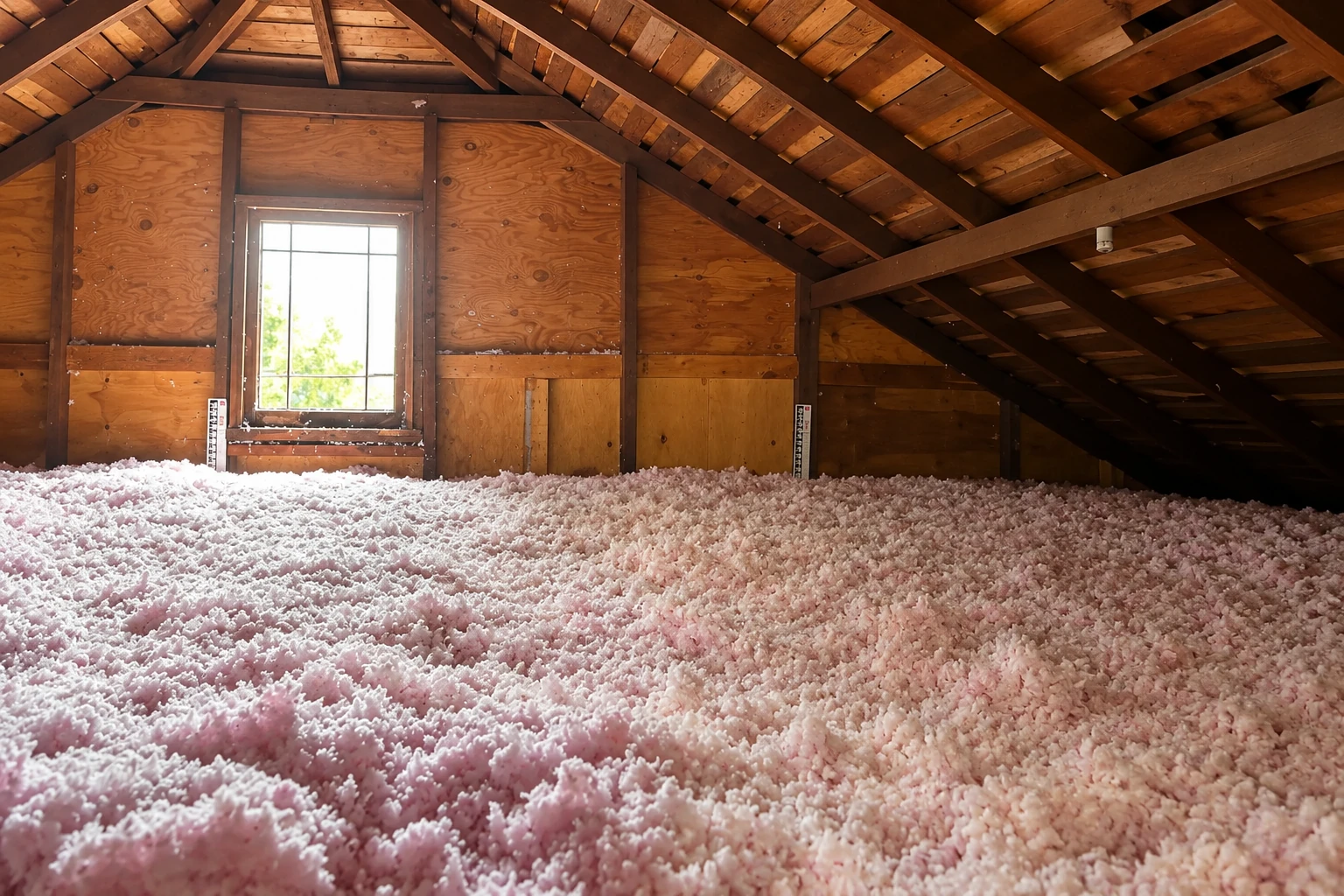
Blown-in insulation is loose fiberglass or cellulose that we blow through a hose across your attic floor in French Valley. It lays an even blanket over whatever's already up there, and it's the usual fix when the upstairs runs hot or the room over the garage never keeps up.
The schedule depends on what the attic looks like. If there's still live knob and tube wiring, the old cloth-covered kind on porcelain knobs, it has to be replaced or properly boxed before insulation goes in. If the old insulation turns out to be vermiculite, a pebbly gray-brown fill that may contain asbestos, work stops until that's dealt with. Either one adds steps before we can blow anything, so I look for both on the first visit.
The price mostly comes down to how big the attic floor is, how many inches are already up there and what shape they're in. It also depends on whether gaps around pipes, lights and the hatch need sealing first, and on any repairs that have to happen before we start. Your written estimate spells out what I found and what I'd do, so you see your own number before you decide anything.
I've been doing insulation full time since 2020, and every attic job runs the same way, with the same person in charge from the first look to the last.
I come out for the estimate myself, check how many inches are up there and look for anything that should be fixed or tested first. Then I explain what I found in plain words and put what I'd do in writing.
When you're ready, our crew comes in and I'm on site leading them for the whole job. We're fully licensed and insured.
Once the fill is down, we clean up and I walk you through the finished attic so you can see the even layer and the open vents for yourself. Satisfaction guaranteed on every job.
Before we start, I go over the attic's repair list with you so you can plan around it. On the day, we set baffles at the eaves first. Those are guides that keep a clear path from the soffit vents up to the roof vents, because when vents get buried the attic stops breathing and moisture ends up in the framing. Gaps around pipes and the hatch get sealed, and older can lights that aren't rated for contact with insulation usually get boxed in and sealed, since loose fill slows heat but won't stop air on its own. Then we keep the fill clear of flues and chimneys and work for an even layer from wall to wall, because coverage that's deep in the middle and thin at the edges is backward, and we see it a lot.
Blown-in fill only helps over insulation worth keeping. If what's up there is soaked or full of droppings, new fill on top just keeps the problem, so insulation removal comes first. If the attic is only part of why the house feels drafty, we can look at the walls and crawl space too as part of home insulation.
Blowing the fill is the quick part, so most of the care goes into the prep before the hose comes in.
We cover the floor from the door to the attic hatch and around it, because dust follows the hose. It helps if anything stored under the hatch is moved before we arrive.
Baffles, blocking around flues and sealing all go in before any fill, because once the new layer is down those spots are buried and hard to reach. This is the step we don't rush.
The machine stays outside at the truck and the hose runs up into the attic, so the mess stays where it belongs. You can usually stay home while we work, but keep kids and pets away from the hatch and the hose.
Before the hose comes down, we check the depth near the walls and eaves as well as the middle and make sure every baffle is still open. Thin spots get filled while the machine is still running.
Send the form or call (951) 417-1035, and if you can, tell us where the attic hatch is, whether you have recessed lights and roughly what's up there now. We reply within one business day, and then I come out, look over the attic and give you a free written estimate. There's no pressure to book.
(951) 417-1035Before any new insulation goes in, the attic should be checked for water leaks, moisture, structural damage and pest damage, and you should get a list of the repairs it needs. Those repairs come first, because fill blown over a leak or a rodent problem just hides it while the damage keeps going.
Attic insulation around the Riverside area usually costs about $1,500 to $5,000 per job, and that's the going range in the area, not a quote from us. Where your attic lands depends on the things covered above, mostly the size of the floor and what's already up there. Your written estimate gives you your own number.
The Riverside County Department of Building and Safety issues permits and does inspections here, because French Valley is an unincorporated part of the county. The county staff who serve District 3 can tell you whether a job needs a permit. When a permit is part of the job, we handle it with the county, and if it's unclear, we ask them before work starts.
In California, the C-2 Insulation and Acoustical Contractor license covers installing any insulating material for heat or sound control. Someone without a license can only take on minor work up to $1,000, and only when the job needs no permit and they don't have anyone working for them.
We're based in French Valley and work across the cities around it in southwest Riverside County, including Murrieta, Menifee and Temecula. A lot of the attics we open around here have original fill that has settled thin, and the calls usually start with a hot upstairs, a room over the garage or a power bill that keeps creeping up.
Permits don't run through the same office everywhere around here. Some of the cities we work in have their own building office and others fall under Riverside County, so I check which one covers your address before we set a date.
Call (951) 417-1035 or send the form, because one look at what's up there now tells us whether new fill can go right over it or the old material has to come out first.
If you're not sure what's in your attic, call or send the form and I'll come take a look.
Tell us about your project